

Starting and getting the best hosting for your blog can be both exciting and a tad overwhelming. Think of your blog as a house. Just as every house needs a piece of land to sit on, every blog needs a space on the internet. This space is provided by something called “web hosting.” Now, imagine if you were to build your dream house. You wouldn’t just pick any piece of land, right? You’d want the best spot that suits your needs and budget. Similarly, choosing the right “spot” or hosting for your blog is super important.

Alright, let’s continue with our house analogy. Imagine you’ve built a beautiful house, but it’s located in an area that’s hard to reach, has frequent power outages, or maybe the water supply isn’t reliable. Not so ideal, right? Similarly, where you decide to “place” or host your blog on the internet can make a big difference in how people experience it.
A web host is like the land where you build your house. It’s a service that provides the necessary technologies and services for your blog (or website) to be viewed on the internet. When someone types in your blog’s address (like a home address), they’re directed to your web host, which then serves them your blog to view.
Imagine inviting friends over to your house, but they have to wait for hours before they can enter. They’d probably leave, right? Similarly, if your blog takes too long to load, visitors might leave before they even see your content. This is why the speed at which your blog loads, known as site speed, is crucial. A good web host ensures that your blog loads quickly.
Uptime is another fancy term that simply means how often your blog is available to visitors. If a web host has frequent downtimes, it’s like having a house that’s often locked, preventing guests from entering. You’d want a web host that guarantees high uptime, ensuring your blog is always accessible.
SEO stands for Search Engine Optimization. Think of it as the directions or map that leads people to your house. If your house is easy to find, more people will visit. Similarly, if your blog is optimized well for search engines like Google, more people will find and visit your blog. A reliable web host can positively impact your blog’s SEO, making it easier for people to find your blog when they search for related topics.

There are various types of web hosting. Each type has its own set of features, pros, and cons. Let’s explore them one by one.
Imagine living in an apartment building where you share amenities like water, electricity, and parking with other residents. Shared hosting is similar. Your blog shares a server with many other websites. This means you also share the server’s resources.
Pros:
Cons:
Think of blog hosting sites as gated communities designed specifically for houses (or in this case, blogs) of a certain type. These hosts offer services tailored for blogging platforms.
Pros:
Cons:
Imagine upgrading from an apartment to your own house or even a mansion. That’s what VPS (Virtual Private Server) and Dedicated Hosting are like. Instead of sharing resources, you get a dedicated portion of a server (VPS) or even an entire server just for your blog (Dedicated).
Pros:
Cons:
Imagine if, instead of one house, you had multiple houses spread across a city, and you could move between them seamlessly. That’s a bit like cloud hosting. Instead of one server, your blog can use resources from multiple servers located in different places.
Pros:
Cons:
By now, you should have a clearer picture of the different hosting types. But how do you pick the right one? Let’s dive into that next!

Selecting the ideal web hosting plan is akin to finding a home for your blog. It’s where your content will live, and its quality can impact your blog’s performance, security, and growth potential. Here’s a guide to help you navigate the choices:
Whether you’re launching a personal diary, a professional portfolio, or an online store, the purpose of your blog will influence the hosting features you require.
If you’re just starting out and anticipate a modest audience, shared hosting might be adequate. However, if you’re aiming for a large readership or migrating an established blog, consider more robust options like VPS or dedicated hosting.
While some hosting solutions are beginner-friendly, others might demand technical expertise. If you’re not tech-inclined, gravitate towards managed hosting or providers known for stellar customer support.
Prices for hosting can span a broad spectrum. While it might be tempting to opt for the most economical choice, remember that quality often correlates with cost. Also, be wary of renewal prices, which can be significantly higher than introductory rates.
As your blog blossoms, you’ll want a hosting plan that can grow with you. Seek providers that offer seamless upgrades to accommodate increased traffic and content.
A secure hosting environment is non-negotiable. Key features to look for include:
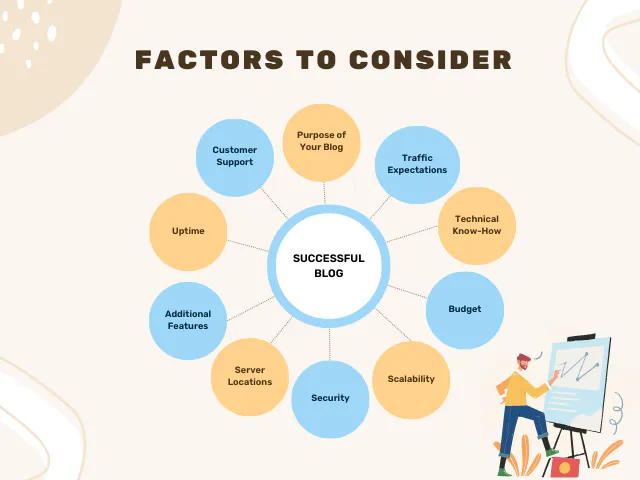
Every minute your blog is down, you risk losing visitors and credibility. Prioritize hosting providers with high uptime guarantees, indicating their reliability.
Round-the-clock customer support can be a lifesaver, especially when unexpected issues arise. Opt for providers known for their responsive and knowledgeable service teams.
Look for perks like one-click WordPress installs, integrated email hosting, and content delivery networks (CDNs) to enhance your blog’s performance and user experience.
The proximity of your hosting server to your target audience can influence site speed. If your readers are primarily in Europe, for instance, a server located there would be beneficial.
Many hosts offer trial periods or money-back guarantees. This can be especially useful if you’re uncertain about your needs or if you’re testing out a provider for the first time.
For a small blog, especially if you’re just starting out, shared hosting might be the best option. It’s budget-friendly and usually provides all the necessary features for beginners. As your blog grows, you can consider upgrading.
Shared hosting is like living in an apartment with neighbors. It’s affordable but might have limited resources. VPS hosting, on the other hand, is like having a bigger apartment in the same building. It offers more space and resources. If your blog is getting a lot of traffic or you need more control, VPS might be the way to go.
WordPress hosting is specifically optimized for websites built on the WordPress platform. It might offer features like one-click WordPress installs or enhanced security for WordPress sites. Regular hosting can support various platforms, including WordPress, but might not have those WordPress-specific perks.
Costs can vary widely. Shared hosting tends to be the most affordable, while dedicated or cloud hosting can be pricier due to the resources and features they offer. Always compare features and read reviews to ensure you’re getting good value for your money.
Free hosting might sound tempting, but it often comes with limitations. Your blog might display ads that you don’t control, or you might not have a custom domain name. For a more professional look and better control, investing in paid hosting is usually a wise choice.
Uptime refers to how often your blog is accessible to visitors. If a hosting provider has frequent downtimes, it means your blog is often unavailable. High uptime (like 99.9%) ensures your readers can access your blog whenever they want.